


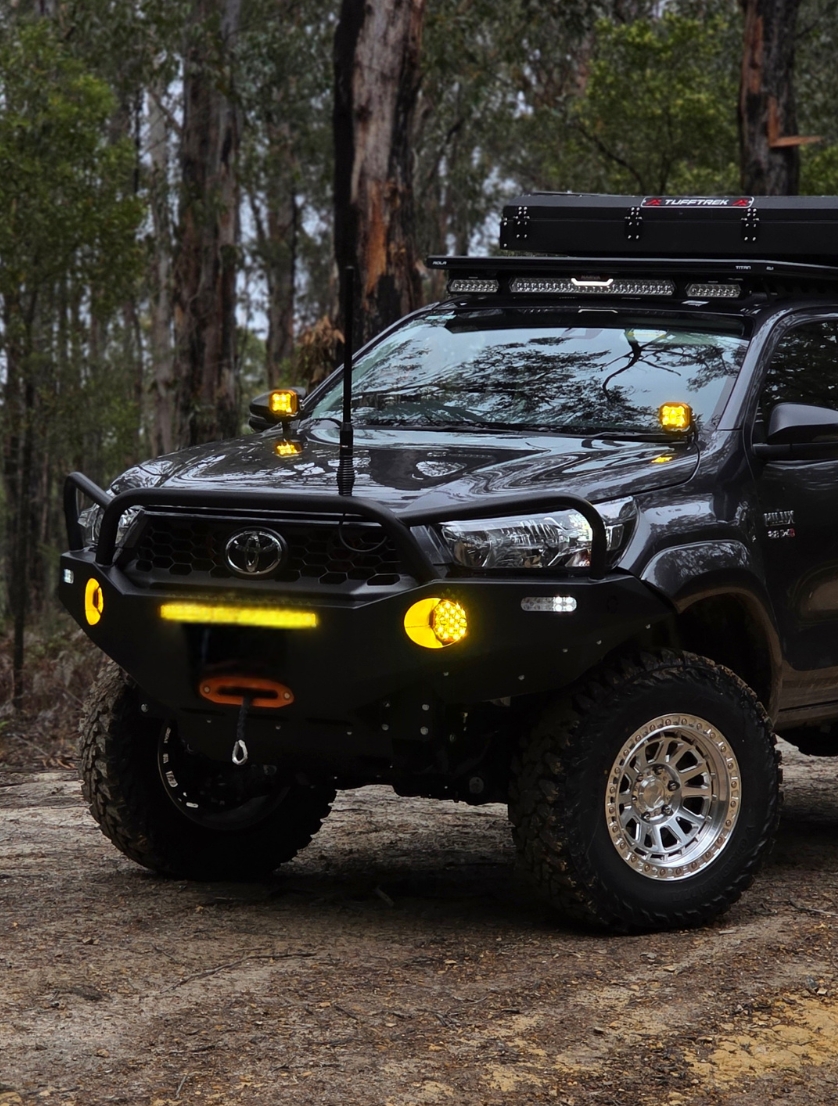
Forged vs. Flow-Formed vs. Cast Wheels: Which Is Right for You?
Your wheels do more than just look good. They directly influence how your car handles, accelerates, brakes, and even how much fuel it consumes. Yet most drivers, even enthusiastic ones, rarely give serious thought to how their wheels are actually made.
The manufacturing process behind a wheel determines nearly everything about its performance characteristics, weight, strength, and long-term durability. Three methods dominate the market today: casting, flow-forming, and forged wheels. Each represents a distinct engineering approach with real-world trade-offs that should matter to anyone serious about their build or daily driver.
Forged wheels sit at the top of the performance hierarchy for good reason, but they are not always the right choice for every application or budget. Flow-formed wheels have carved out an impressive middle ground, while cast wheels remain the most widely used option in the industry for practical reasons worth understanding.
In this guide, we break down exactly how each manufacturing method works, what advantages and limitations each brings to the table, and how to determine which type genuinely suits your needs, driving style, and goals.
The Three Constructions Explained: Forged, Flow-Formed, and Cast
Not all alloy wheels are created equal, and the difference between a cast, flow-formed, and forged wheel is not simply a matter of price or aesthetics. The manufacturing process fundamentally determines the physical properties of the finished product, including its grain structure, strength-to-weight ratio, and long-term fatigue resistance. Understanding these distinctions is the essential first step before evaluating any performance or weight claim made by a wheel brand.
Cast Wheels: The Baseline Standard
Cast wheels are produced by pouring molten aluminium into a mould and allowing it to cool and solidify. This process is approximately ten times faster than forging, which explains why cast wheels dominate production vehicles, accounting for roughly 90% of all original equipment wheels shipped on new cars. The speed and simplicity of casting makes it the most affordable construction method available. However, the cooling process produces a random, inconsistent grain structure throughout the aluminium. This lack of uniformity creates potential weak points within the material, and to compensate for porosity risks, manufacturers typically add extra material to maintain structural integrity, resulting in a heavier finished wheel. Cast wheels are entirely functional for standard road use, but their mechanical properties reflect the limitations of the process that creates them.
Flow-Formed Wheels: The Engineered Middle Ground
Flow-formed wheels begin life as a low-pressure cast blank with a shortened, thickened barrel. A rotary machine then spins the blank under heat while rollers press the barrel outward to its final dimensions. This combination of pressure, heat, and rotation compresses and aligns the aluminium grain structure specifically within the barrel section, producing forged-like properties in that critical area. The result is a wheel that is measurably stronger and lighter than a fully cast alternative, at a price point that sits between cast and full forged. It is worth noting that flow-formed wheels are marketed under several names across the industry, including "rotary forged," "spun forged," and "hybrid forged." Buyers should verify manufacturing claims carefully, as some wheels marketed as flow-formed have been questioned by consumers who suspect standard cast construction is being sold under premium terminology.
Forged Wheels: The Performance Benchmark
Forged wheels are manufactured by compressing a solid aluminium billet under extreme hydraulic force, typically ranging from 8,000 to 10,000 tonnes of pressure, before CNC machining produces the final form. This process, which takes hours rather than the minutes required for casting, produces the tightest and most uniformly aligned grain structure achievable in aluminium wheel manufacturing. The result is maximum strength combined with minimum weight, a combination that makes forged wheels the benchmark for performance applications. As detailed comparisons of cast, flow-formed, and forged construction methods confirm, the monoblock forged design takes this advantage further by machining the entire wheel from a single forging. There are no seams, no joints, and no hardware connections introducing potential weak points into the structure. PDW Wheels applies this monoblock forged approach across its performance range, ensuring the structural integrity of a single continuous aluminium piece from spoke face to barrel. Multi-piece forged constructions offer customisation flexibility, but for applications where consistent load management and outright strength matter, the monoblock design is the superior choice.
The manufacturing method is the starting point for any honest wheel comparison. Construction determines properties, and properties determine real-world performance.
Performance Comparison: Weight, Strength, Load Ratings, and Terrain
Understanding where each construction type actually performs requires looking at measurable outputs, not just manufacturing theory. Weight, structural integrity, load capacity, and terrain suitability each tell a distinct part of the story, and the differences between forged, flow-formed, and cast wheels become most consequential precisely when and where Australian drivers push their vehicles hardest.
Weight and Unsprung Mass
Forged wheels typically weigh 20 to 25 percent less than an equivalent cast wheel in the same size. On a full-size 4x4 like a Toyota LandCruiser 300 Series running 17-inch wheels, that translates to roughly 2 to 4 kg saved per corner, or up to 16 kg of total unsprung mass reduction across all four wheels. That figure carries real engineering significance. Unsprung mass reduction has a compounding effect on vehicle dynamics: suspension response becomes sharper because the wheel and tyre assembly follows terrain contours more accurately, braking distances shorten as rotational inertia decreases, and steering feedback improves across the board. These gains are amplified considerably on corrugated outback tracks and uneven off-road terrain, where each wheel is absorbing hundreds of micro-impacts per kilometre. The lighter the rotating assembly, the less energy is lost managing those impacts rather than transmitting driver inputs.
Structural Integrity and Failure Behaviour
The safety distinction between cast and forged wheels lies not just in peak strength, but in how each construction fails under extreme stress. Cast wheels are produced by pouring molten aluminium into a mould, which creates a looser, more porous grain structure. Under sustained off-road impact, that structure is more susceptible to sudden fracture rather than progressive deformation. Forged wheels are manufactured under high compressive force, which aligns the aluminium grain and eliminates internal porosity. The result is a wheel that tends to deform predictably under extreme load rather than fracturing without warning. As this professional comparison of forged and cast wheel construction explains, that predictable deformation behaviour is a meaningful safety distinction in remote terrain where a sudden wheel failure far from assistance carries serious consequences.
Load Ratings: The Overlooked Specification
Load ratings are frequently underestimated because buyers often divide GVM by four wheels and assume any result above that figure is sufficient. Dynamic loading during real-world driving, such as cornering on corrugated tracks, emergency braking with a loaded trailer, or drop-ins at creek crossings, can momentarily exceed static weight by a significant margin. This is where forged and heavy-duty wheel construction genuinely separates itself. PDW's forged and heavy-duty 4x4 wheels carry load capacities of up to 1,650 kg per wheel, a specification that carries direct relevance for vehicles towing caravans or carrying GVM-rated payloads under Australian road rules. For drivers operating near their vehicle's rated limits, that headroom above static load is not a premium feature; it is a compliance and safety requirement. The global forged wheel market research for 2034 confirms that load performance demands are among the primary drivers pushing both OEM and aftermarket buyers toward forged construction over cast alternatives.
Where Flow-Formed Wheels Fit
Flow-formed wheels occupy a genuine and useful middle ground. Lighter and structurally stronger than fully cast wheels, they perform well across most on-road driving and moderate off-road conditions. For drivers who spend the majority of their time on sealed roads with occasional gravel or light trails, flow-formed construction delivers a meaningful upgrade over cast without the investment that forged wheels require. The practical boundary becomes apparent, however, when load ratings and extreme terrain enter the equation. When a vehicle is regularly loaded to GVM, towing near capacity, or traversing sustained technical terrain, flow-formed construction does not offer the same structural ceiling that a true monoblock forged wheel provides. Choosing the right construction means being honest about where the vehicle actually operates and what it is genuinely asked to carry.
Cost vs. Long-Term Value: Is Forged Worth the Premium?
The upfront cost of forged wheels is higher than cast or flow-formed alternatives, and any honest evaluation must state this plainly before going further. Depending on the application and specification, forged monoblock designs can carry a meaningful price premium over equivalent cast options. That premium, however, tells only part of the financial story.
The more useful frame is cost per kilometre, particularly for drivers who tow regularly, load to GVM, or run extended off-road itineraries. A cast wheel that fails on a remote track does not simply represent the cost of the wheel itself. Recovery, towing, replacement parts sourced in regional Australia, and potential vehicle damage from a catastrophic failure can collectively dwarf the original price difference between construction tiers. For a working 4x4 covering serious terrain, the structural margin built into a forged wheel is not a luxury; it is risk mitigation with a calculable return.
Fuel efficiency gains from reduced rotational mass are real, though they should be presented proportionately. Lighter wheels require less energy to accelerate and decelerate with every rotation, and that mechanical advantage compounds across high-mileage use. A working 4x4 covering 30,000 kilometres or more per year will accumulate measurable efficiency gains over time compared to running heavier cast alternatives, particularly under load where drivetrain strain is already elevated.
Resale value is another dimension that cast-focused buyers frequently overlook. Forged wheels retain strong demand in the enthusiast and performance vehicle market, meaning a well-specified set transfers cleanly to a new build or commands a genuine return when selling. For drivers who cycle through vehicle upgrades regularly, this changes the net cost calculation considerably.
The broader market reflects this investment logic. The global alloy wheels aftermarket is forecast to grow from approximately $3 billion in 2025 to $4.32 billion by 2030, with detailed wheel construction comparisons confirming that consumers are increasingly approaching wheel selection as a long-term performance and financial decision rather than a purely cosmetic one. That sustained market expansion signals a structural shift: buyers are demanding more from their wheels, and they are prepared to invest accordingly.
Forged Wheels and EV Suitability: Why Lightweighting Matters More Than Ever
Electric SUVs and 4x4s carry a substantial weight burden that their combustion counterparts simply do not. Battery packs routinely add 400 to 600 kilograms to a vehicle's overall mass, and that penalty compounds at the wheel level. Unsprung weight, the mass not supported by the suspension, directly affects how efficiently a drivetrain manages rotational inertia. Every kilogram removed from a wheel reduces the energy required to accelerate, decelerate, and change direction, which translates into extended battery range, sharper handling response, and measurably improved regenerative braking efficiency. Replacing cast or OEM steel wheels with forged alloy alternatives can reduce unsprung mass by up to 30%, according to current forged wheel market analysis, representing a genuine engineering advantage rather than a cosmetic one.
This demand is reshaping the global wheel industry at pace. The New Energy Vehicle Wheels segment is now tracked as a distinct high-growth category, reflecting how OEMs and aftermarket suppliers are restructuring EV-specific supply chains. The global automotive aluminum alloy forging wheel market was valued at USD 8.03 billion in 2025 and is projected to grow at a CAGR of 14.58% through the forecast period, driven explicitly by EV proliferation and lightweighting mandates.
For Australian drivers upgrading electric SUVs and 4x4s, forged construction should be the baseline specification, not an optional premium. Beyond mass reduction, forged wheels can be machined to tighter dimensional tolerances than cast alternatives, enabling aerodynamic spoke profiles that reduce drag at highway speeds, a secondary but real range benefit for EV owners covering long distances between charges.
Why Australian Conditions Change the Wheel Construction Equation
No other market on earth combines the variables that Australian drivers face into a single, sustained stress test for wheel construction. Corrugated outback tracks generate dynamic loads that can momentarily exceed a vehicle's static weight by a factor of two or more, rocky terrain demands consistent structural integrity across thousands of kilometres between service points, and summer bitumen surface temperatures regularly exceed 80°C in inland and northern regions. European and American testing standards are benchmarked against conditions that do not replicate this combination, which means wheels validated for those markets arrive in Australia having never faced the specific fatigue profile that Australian terrain produces.
The compliance dimension adds a layer that transforms wheel selection from a performance decision into a regulatory one. Australian towing regulations impose strict GVM and GCM limits, and wheels that do not carry a load rating sufficient for a vehicle's configured weight can void roadworthy certification and insurance coverage in the event of an incident. Industry professionals working with modified 4WDs regularly observe vehicles equipped with wheels that are simply not rated for the loads being placed on them, particularly in GVM-upgrade and heavy-towing configurations. A practical benchmark widely cited in the Australian modified vehicle community is a minimum of 1,600 kg per wheel for any GVM-upgraded or towing setup, a threshold that highlights why the load rating advantage of forged construction carries direct legal weight.
The caravan and camper trailer market amplifies this requirement at scale. Australia's per capita ownership of caravans and camper trailers sits among the highest in the world, and trailer wheels operating at or near their maximum rated load for extended highway towing face a sustained fatigue cycle that is structurally different from occasional off-road use. Forged aluminium's denser, mechanically aligned grain structure resists the cumulative micro-stress of this kind of loading more effectively than cast alternatives, particularly when combined with the thermal cycling that long outback highway runs produce.
Heat cycling is a factor that is frequently underestimated in wheel selection. The hidden mathematics of real-world load demands compound on cast products when repeated thermal expansion and contraction gradually open micro-voids in less consistent grain structures. Forged aluminium's uniformity at the material level means it handles this cycle more predictably over time, maintaining structural integrity across the seasons-long heat exposure that Australian summers deliver across the country's interior.
PDW Wheels approaches its product engineering with these conditions as primary design inputs rather than secondary adaptations. Where globally standardised products are calibrated for Northern Hemisphere testing environments and then adjusted for Australian fitment requirements, PDW's forged and flow-formed range is built around the load capacities, terrain profiles, and towing demands that define the Australian market from the ground up. That distinction, between a product designed for these conditions and one adapted to meet them, is meaningful when the conditions themselves are this unforgiving.
PDW's End-to-End Manufacturing Advantage
When Australian drivers evaluate premium forged wheels, the supply chain behind the product matters as much as the product itself. PDW Wheels stands as the only Australian manufacturer-owned alloy wheel brand that controls its entire production process, from precision forging at its specialised offshore manufacturing facilities through to domestic distribution managed from its Epping, VIC logistics centre. This is a structural advantage, not a positioning statement.
Most global volume suppliers operate through fragmented supply chains where manufacturing, quality control, and distribution are handled by separate entities with separate accountability standards. PDW's integrated model means quality checkpoints are applied internally at every production stage, covering automated manufacturing, R&D quality control, production QC, and design development, all maintained within a single group structure. The result is consistency that third-party supplier models structurally cannot guarantee.
PDW's operation across both OEM and aftermarket segments reinforces this quality floor. Forged monoblock designs, including the dedicated PDW Forged sub-brand models, are engineered to fitment and safety compliance standards that vehicle manufacturers demand. Those same standards carry directly into the consumer-facing aftermarket range rather than being relaxed for volume production.
The Epping, VIC distribution centre adds a capability that offshore manufacturers cannot replicate remotely. Local fitment guidance specific to Australian vehicle configurations, towing setups, and off-road terrain use cases requires on-the-ground knowledge of how Australian drivers actually load and operate their vehicles. A global volume manufacturer shipping product through a general importer has no equivalent touchpoint.
For buyers weighing forged wheel options, PDW Group's dual manufacturing and distribution capability directly addresses the accountability gap that typically accompanies premium aftermarket purchases sourced through international supply chains. Local ownership of the full process means clear responsibility at every stage.
Which Wheel Construction Is Right for Your Vehicle and Use Case?
Matching wheel construction to your specific vehicle and use case is ultimately a straightforward decision once the variables are defined clearly.
Cast wheels remain a legitimate and cost-appropriate choice for light passenger vehicles driven predominantly on sealed roads with no towing requirements. When a vehicle never approaches the performance ceiling that forged construction is engineered to handle, paying the premium for forged is not prudent engineering; it is unnecessary expenditure. The lower cost of cast wheels is a genuine advantage in this context, not a concession.
Flow-formed wheels represent the strongest recommendation for drivers seeking a meaningful structural upgrade over OEM cast wheels without committing to full forged pricing. Daily-driven SUVs that see occasional gravel, light off-road tracks, or mixed-surface touring sit precisely in this category. The improved barrel density and reduced weight deliver a real-world performance gain over standard cast alternatives, and the price point reflects a sensible middle ground for vehicles whose use case exceeds cast capability without demanding forged-level engineering.
Forged wheels are the correct specification for vehicles that tow regularly, operate near GVM limits, travel serious off-road terrain, or carry loads where a wheel failure carries direct safety consequences. In these applications, the premium cost is not optional; it is the appropriate engineering response to the operating environment.
For 4x4 owners, caravan towers, and adventure-focused SUV drivers, PDW's forged monoblock range delivers the load capacity, terrain resistance, and unsprung weight reduction that Australian conditions demand. Available across passenger, SUV, 4x4, and trailer fitments, PDW provides locally accountable distribution from Epping, VIC, backed by manufacturer-level control over every stage of production. For a detailed breakdown of construction differences, this comparative overview of cast vs flow-formed vs forged wheels is a useful reference point.
Conclusion: Match Your Wheel Construction to What You Actually Ask of Your Vehicle
The forged versus flow-formed versus cast decision ultimately comes down to a single principle: matching engineering capability to what you genuinely demand from your vehicle. Spending a premium on forged wheels for a light city commuter delivers diminishing returns, while fitting cast wheels to a heavily loaded tow vehicle working remote Australian terrain is a false economy that compounds in repair costs, downtime, and safety risk over time.
For Australian drivers pushing vehicles hard across corrugated tracks, loaded trailers, and variable terrain, forged wheels deliver quantifiable advantages in weight reduction, load ratings, terrain durability, and long-term value that consistently justify the price difference across the vehicle's working life. These are not marginal gains; they are structural performance differences that compound with every kilometre under load.
The global forged alloy aluminum wheel market projecting a 5.8% CAGR through 2033 confirms this is not a niche preference. It reflects a structural shift in how both OEM engineers and aftermarket buyers approach wheel selection, driven by lightweighting demands, EV adoption, and performance expectations.
Speak with PDW Wheels directly to identify the right construction for your vehicle, towing configuration, and terrain. Australian fitment expertise, locally stocked inventory, and full manufacturer accountability are available from a single source.